

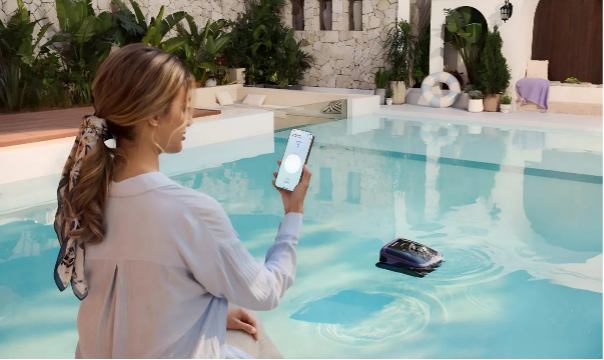
Buying your first pool cleaner can feel confusing. There are robotic cleaners, suction cleaners, pressure cleaners, manual vacuums, cordless models, wall-climbing models, and plenty of feature claims that sound important until you try to compare them.
The good news is that first-time pool owners do not need to learn every technical term before making a smart choice.
Start with the basics. Know your pool. Know what usually gets dirty. Know which areas you want cleaned. Then choose a cleaner that fits the way you will actually use it.
Start With What a Robotic Pool Cleaner Does
A robotic pool cleaner is a self-contained cleaning device that moves through the pool and collects physical debris into its own basket or filter system. It usually works separately from the pool’s main pump, suction line, or manual vacuum setup.
That makes it different from a suction cleaner, which connects to pool suction, and a pressure cleaner, which uses water pressure to move and collect debris. A manual vacuum depends even more on the owner doing the work.
A robotic cleaner can reduce repeated physical cleaning, especially when the pool collects leaves, sand, dirt, bugs, pollen, hair, or small particles. Depending on the model, it may clean the floor, walls, waterline, surface, steps, or shallow ledges.
It does not replace all pool care. Water still needs testing. The filter system still needs maintenance. Large debris and safety checks still need human attention.
Know Your Pool Before You Choose a Robot
The biggest beginner mistake is shopping by product features before understanding the pool.
Pool size matters because a cleaner needs enough coverage and runtime to finish the job. A small round pool has different needs from a large freeform in-ground pool. Rectangular pools may be easier to cover, while kidney-shaped or freeform pools may need better navigation.
Pool surface matters too. Vinyl, fiberglass, concrete, ceramic tile, and other surfaces can affect traction and brushing needs. Slopes, steps, benches, and ledges may require a more capable cleaner than a simple flat-floor model.
Debris type may be the most practical detail of all. A pool near trees may need surface cleaning and a basket that handles leaves. A pool near bare soil may need help with fine dirt and sand. A family pool may collect sunscreen residue near the waterline, hair, grass clippings, and small toy debris.
Decide Which Cleaning Zones Matter
New pool owners often think the floor is the only area that needs cleaning. Then they discover marks at the waterline, dust on steps, residue on walls, and leaves floating on the surface.
This is when a first-time owner should stop asking what sounds like a good pool vacuum and start asking what the cleaner actually covers.
Floor cleaning handles settled dirt, sand, and grit. Wall cleaning helps with residue on vertical surfaces. Waterline cleaning matters when sunscreen and body oils leave visible marks. Surface cleaning matters when leaves, pollen, and insects are common. Shallow areas and ledges can also need attention because debris often gathers where people step in and out.
Do not pay for zones you do not need, but do not ignore the ones that get dirty every week.
Understand Cordless Use, Runtime, and Retrieval
Cordless models can make setup easier because there is no cable around the pool edge and no hose to connect. That can be helpful for beginners because the cleaner is easier to start after a windy day, a pool party, or a busy weekend.
Cordless also means charging becomes part of the routine. A cleaner with long runtime is useful only if it matches the size and debris load of the pool. A small pool may not need the longest battery life. A large or debris-heavy pool needs enough runtime to complete a full cycle.
Retrieval matters more than many buyers expect. If the robot is heavy, awkward to drain, or difficult to pull from the water, owners may use it less often. Basket cleaning matters too. A debris basket that is easy to remove and rinse makes the whole experience simpler.
A Beatbot Pick That Keeps the First Choice Simple
For a first-time pool owner, Beatbot Sora 70 is a practical starting point because it covers areas many beginners do not realize they need until the pool starts showing problems. A new owner may think only the floor needs cleaning, then notice floating leaves, insects, waterline marks, shallow ledge debris, and wall residue returning during normal use.
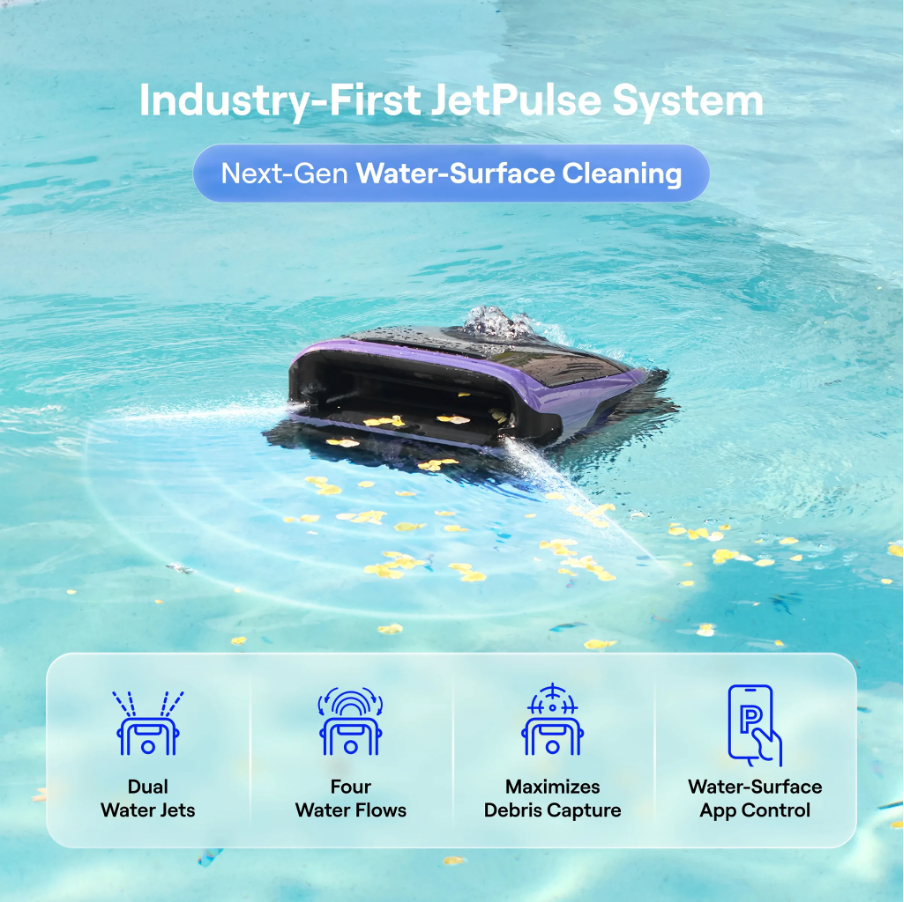
Sora 70 is designed as a cordless pool vacuum that cleans the surface, floor, waterline, and walls. Beatbot lists an optimized S path, five cleaning modes, and coverage up to 3230 sq ft, which gives beginners a clearer sense of what the cleaner is built to handle. It is also described as compatible with common pool shapes such as rectangular, round, kidney, and freeform pools, as well as common materials including concrete, vinyl, fiberglass, ceramic tile, and stainless steel.
For a buyer comparing a pool cleaner robot, the value is confidence. Sora 70 helps reduce the chance of buying a cleaner that only solves one part of the mess. It still does not take over water chemistry, skimmer and pump basket cleaning, main filter maintenance, large debris removal, swimmer safety, or professional help for leaks, equipment faults, algae, stains, scale, or persistent cloudy water.
Avoid Common First-Time Buyer Mistakes
Many first-time owners buy only by price. That can work if the pool is small and simple, but it can also lead to missed zones, short runtime, or frustrating cleanup.
The opposite mistake is buying the most expensive model without matching it to the pool. More features are not always better if the cleaner is too large, too heavy, or designed for a pool very different from yours.
Other common mistakes include ignoring steps and ledges, forgetting about filter basket size, choosing a cleaner that is hard to retrieve, and expecting a robot to fix cloudy water or algae without testing and balancing the water.
Also check support, warranty, replacement filters, and basic maintenance requirements before buying.
Build a Simple Routine After You Buy One
A robotic cleaner works best when it becomes part of a simple routine. Remove large toys, branches, rocks, towels, and sharp objects before running it. Run the cleaner after windy days, heavy swimming, or outdoor gatherings. Empty and rinse the debris basket after cycles so the cleaner is ready next time.
Check skimmer and pump baskets separately. Test chlorine, pH, alkalinity, and stabilizer on a schedule. Store and charge the cleaner according to the manufacturer’s instructions. Keep children away from the pool while the cleaner is running or being retrieved.
The robot handles repeated physical cleaning. The owner still manages water, equipment, and safety.
Choose the Cleaner That Fits Your Pool and Habits
The best robotic pool cleaner for a first-time owner is not always the one with the most features. It is the one that matches the pool, the debris, and the routine.
Know your pool size and shape. Match cleaning zones to real mess. Choose runtime and retrieval features you will actually use. Pick a model that is easy enough to maintain regularly.
A robotic pool cleaner is easiest to choose when you stop comparing every feature and start matching the machine to your pool, your debris, and your everyday habits.

0 Comments