

You mix a new brightening serum. You put it in the stability oven at 45 degrees Celsius. Two weeks later? It turns brown. The emulsion splits. The lab just wasted another week of R&D time.
Formulators deal with this constantly. You want plant extracts that actually do the job on human skin. But botanical ingredients are notoriously stubborn. They hate water. They crash out of solution. They carry off-odors that ruin the product experience.
Let’s look at the actual chemistry. We manufacture these materials directly at Shaanxi Huatai Bio. Our factory floors run these extractions every single day. We know exactly how they behave inside a stainless steel mixing tank. No magic stories. Just cold, hard data.
Have you ever tried to stop a breakout while simultaneously fading the dark spot it leaves behind? That is the hardest job in skincare. You need two entirely different chemical mechanisms. You need Glabridin to shut down the pigment production. You need Totarol to stop the specific acne bacteria.
Let’s break them down.
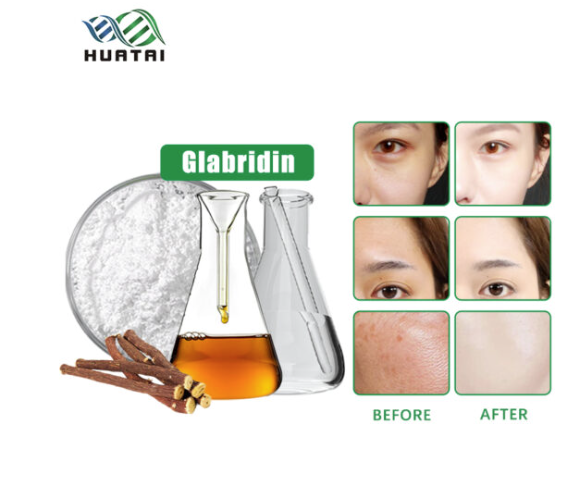
Glabridin : Shutting Down the Pigment Factory
Consumers demand even skin. They hate dark spots. But your regulatory team probably banned hydroquinone. High-dose Vitamin C? It turns orange and oxidizes before the customer even opens the bottle.
Glabridin fixes this exact problem. It comes deep from the roots of the licorice plant. It physically blocks the enzyme that builds skin pigment. Cut the power to the factory, and the dark spots simply stop forming.
But it is not easy to work with on the bench. Glabridin absolutely hates water. Dump it into an aqueous base, and you get a cloudy, unusable mess. You must pre-dissolve it in butylene glycol or propylene glycol. Treat the powder right, and it stays perfectly stable for years.
Here is the exact factory data pulled from glabridinchina.com:
| Parameter | Glabridin Specification |
| Botanical Source | Glycyrrhiza glabra L. |
| Appearance | White to pale yellow powder |
| Purity Options | 40%, 90%, 98% (HPLC tested) |
| Solubility | Insoluble in water. Soluble in glycols and ethanol. |
| Recommended Dose | 0.05% – 0.2% |
| Core Function | Tyrosinase blocking (Skin brightening) |
You do not need a massive dose. Even 0.05% of the 90% purity grade does heavy lifting in a commercial cream. We strip out the dead weight during our extraction process. That means no brown tint. No roasted syrup smell. Your final emulsion stays pristine white. Consumers buy with their eyes first. If the cream looks muddy, the marketing team will reject it instantly.
Totarol : The Selective Microbiome Bouncer
Now consider the acne side of the equation. Standard chemical preservatives wipe out everything on the face. They destroy the good bacteria right along with the bad. The skin barrier panics. It gets red, dry, and angry.
Totarol behaves completely differently. We extract it from the recycled wood of the New Zealand Totara tree. It acts like a selective bouncer at a club. It specifically targets the acne bacteria while leaving the skin’s natural bacterial defense intact.
Is it strong? Extremely. Experimental testing proves its antioxidant power is seven times stronger than standard Vitamin E. It stops the raw oils on your face from going rancid. It prevents environmental stress from aging the cells.
Look closely at the numbers. It takes just 0.0005% to stop Propionibacterium acnes from growing in a petri dish. That is a microscopic amount of active material doing massive biological work.
| Parameter | Totarol Specification |
| Botanical Source | New Zealand Totara Tree Wood |
| Appearance | 99% White Crystalline Powder / Liquid options |
| Purity Grades | 1%, 2%, 5% (Liquid) / 80%, 99% (Powder) |
| Solubility | Powder is Oil/Alcohol soluble. (1% liquid is water soluble). |
| Shelf Life | 24 Months (Powder grades) |
| Recommended Dose | 0.01% – 0.5% (Powder) |
| Core Function | Acne control, selective bacteriostasis, antioxidant |
How do you get Totarol into a commercial formula? The high-purity powder loves oil. Drop it directly into your heated lipid phase. It melts right in smoothly. Do not put it in your cold water phase. It will just float on top like sand.
Why Combine Them? The Real Fix for Post-Breakout Spots
Why pair these two specific ingredients together? Because acne and dark spots are a biological package deal.
A breakout happens. The skin gets intensely inflamed. The inflammation triggers a massive dump of melanin to protect the injured tissue. You get a dark brown spot that lasts for six agonizing months.
You break that cycle by using both actives simultaneously.
Totarol kills the acne bacteria and puts out the biological fire.
Glabridin steps in immediately to stop the resulting pigment dump.
This is how you build a real, functional blemish-control serum. You pre-dissolve the Totarol powder in your lipid phase. You dissolve the Glabridin powder in your glycol phase on the side. You emulsify them properly at the right temperature. You cool the batch down.
Troubleshooting Common Lab Errors
Let’s save your R&D team some headache.
If your Glabridin formula is turning yellow over time, check your pH. It hates highly alkaline environments. Keep your final batch pH strictly between 5.0 and 7.0. It thrives right in that middle zone. If you push the pH too high, the active molecule degrades quickly.
If your Totarol is crystallizing in the bottle, you messed up the solvent ratio. Totarol needs a robust lipid carrier. It plays incredibly well with squalane, caprylic/capric triglycerides, and standard cosmetic esters. Avoid throwing it into a purely silicone-based system without a bridging solvent. It will just crash out and form sharp microscopic crystals. Your customers will literally feel it scratching their skin.
These are the small technical details that separate a successful product launch from a massive, embarrassing recall.
Do not fall for cheap, dark-colored extracts from trading companies. Low purity ruins your emulsion’s melting point. Impurities cause ugly graininess on the store shelf. We maintain strict HPLC testing at Shaanxi Huatai Bio so your drums match exactly, every single time you order.
Cosmetic formulation does not need to be mysterious. You just need raw materials that behave predictably. You want formulations that survive the extreme heat of the stability oven. You want end-users to actually see their breakouts clear and their dark spots fade.
Stop guessing on the bench. Stop using fluff ingredients for label claims. Pull the raw material specs directly from glabridinchina.com. Start formulating with chemistry that actually works.

0 Comments