

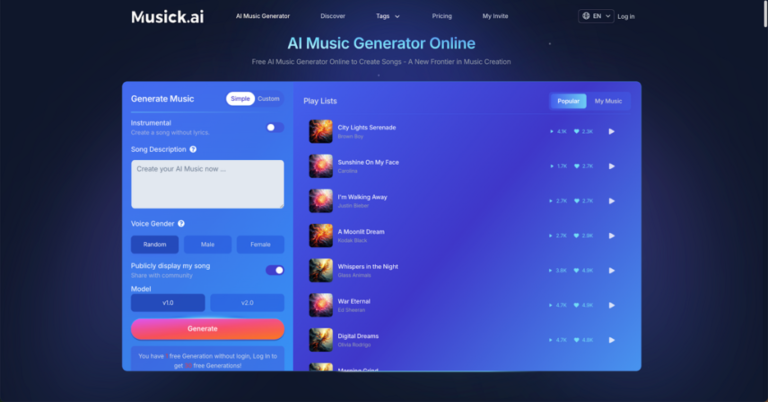
Most ads fail before a single word is read — because the sound is wrong. Background music shapes how people feel within seconds, and that feeling determines whether they keep watching or scroll away. Musick AI, an AI Music Generator built for creators and businesses, lets anyone produce original, royalty-free tracks matched to a specific message, audience, and mood — without hiring a composer or clearing licenses.
I. The Audio-Emotion Connection in Advertising
Music is processed emotionally before it is processed intellectually. Before a viewer consciously evaluates what an ad is saying, the tone, tempo, and instrumentation have already set an expectation. A mismatch between audio and message — an upbeat track behind a serious product, or slow ambient music in a fast-paced promo — creates cognitive friction that quietly kills conversion.
Stock music makes this problem worse, not better. Licensed tracks carry cultural baggage. If viewers have heard the same loop in a dozen other ads, they stop registering it as part of your brand. The music becomes noise. Custom audio, generated to fit one specific ad, sidesteps this entirely.
II. Way 1 — Match Music to the Buyer’s Emotional State
Targeting Feeling, Not Just Demographics
The most effective ads meet the buyer where they already are emotionally. A fitness brand ad targeting early-morning workout energy needs something completely different from a wellness brand targeting stress relief at 11 p.m. One demands aggressive percussion, fast tempo, high energy. The other calls for slow harmonic movement, soft instrumentation, calm.
Musick AI supports over 15 genre options — EDM, R&B, Jazz, Pop, Rap, Metal, Rock and Roll, Hip-hop, Blues, Reggae, Saxophone, Kpop, Classical, Disco, and Country — giving advertisers the flexibility to match audio precisely to the emotional context of each campaign. Users describe the mood, genre, and feel they want in a text prompt, and the generator produces a custom track built around those inputs.
Practical Application
Instead of using one generic background track across all ad variations, run separate audio for each audience segment. A product targeting college students might use a Hip-hop beat. The same product marketed to professionals in their 30s might use understated Jazz. The visuals stay the same; the emotional framing changes. That single adjustment can lift engagement significantly.
III. Way 2 — Eliminate the Royalty Risk That Kills Ad Campaigns
Copyright Problems Are Conversion Problems
Running an ad on YouTube, Instagram, Facebook, or TikTok using unlicensed music is not just a legal issue — it is a campaign termination risk. A muted or taken-down ad cannot convert anyone. Many small businesses and independent creators lose entire campaigns mid-run because of audio copyright claims on music they assumed was safe.
Musick AI generates music that is royalty-free and copyright-compliant, designed specifically for commercial use across social media platforms including YouTube, Instagram, and Facebook. All tracks are produced through its own system with a consent-based approach, meaning there is no third-party copyright exposure built into the output.
The Confidence Factor
When a media buyer knows the audio is clean, they can run campaigns without interruption or legal review delays. That operational certainty is underrated. Ads stay live longer, budgets are not wasted on pulled placements, and conversion data accumulates without gaps. The AI Music track created for an ad can be reused across every placement of that campaign — social, display, pre-roll — without additional licensing costs or clearances.
IV. Way 3 — Produce Audio Variations Fast Enough to Actually Test
Why Most Teams Skip Audio A/B Testing
Audio testing is almost nonexistent in small-to-midsize ad campaigns. The reason is not a lack of interest — it is time and cost. Commissioning two or three custom tracks from a composer is expensive and slow. So teams pick one background track, run it everywhere, and never know if a different audio choice would have outperformed it.
Musick AI removes that bottleneck. Using its text-prompt interface, an ad team can generate multiple distinct tracks in the same session — one with a driving EDM tempo, one with a stripped-back acoustic feel, one with no vocals and a cinematic tone. Each variation takes minutes to produce, not days.
Building an Actual Testing Workflow
The process is straightforward: log into Musick AI, input a text description of the intended audio feel, select genre and vocalist preference, and generate. Review the output, adjust the prompt if needed, and download for use. Pair each audio version with the same ad creative, run them as separate placements, and measure completion rate, click-through, and conversion against each version. Over time, a brand builds a clear picture of what its audience actually responds to — and that data is far more actionable than generic audience targeting alone.
V. Tools That Support Ad-Ready Music Production
Musick AI goes beyond a basic generator. Its platform includes an AI Song Maker workflow where users input a style description and generate full-length tracks, as well as additional tools including an AI Song Lyrics Generator, AI Beat Producer, and AI Rap Generator.
For ad teams that need more than background music — for example, a branded jingle or a spoken-word style track — the AI Lyrics Generator allows the team to build a complete audio identity around a campaign concept. The AI Beat Producer gives control over the rhythmic structure, which is useful for ads where the visual pacing needs to sync with audio hits.
VI. Who Gets the Most Value From This
Content Creators and Small Business Ad Teams
Independent content creators running paid promotions benefit most immediately. They typically have no music budget, rely on stock tracks, and face the highest risk of copyright interference. Musick AI solves all three problems with a single tool.
In-House Marketing Teams
In-house teams at growing brands benefit from the speed. Rather than routing audio requests through an external vendor with a multi-week turnaround, a team member can produce a tested, production-ready track in the same afternoon the ad brief is written. That compression of the production cycle means more iterations, better results, and less dependency on external contractors.
VII. Putting It Into Practice
The three ways custom audio improves ad conversion rates are not theoretical. Matching music to the emotional state of the buyer, using royalty-free tracks that stay live without copyright interruption, and generating multiple audio variations for actual A/B testing are all concrete, repeatable steps. Each one is made practical by tools like Musick AI, which operates as an AI Music Maker requiring no musical training, no licensing negotiation, and no long production timelines.
The next ad campaign does not need a bigger budget to sound better. It needs a different approach to audio — one that starts with the audience’s emotional state and builds outward from there.

0 Comments