

The landscape of business has dramatically shifted. As we navigate July 2026, embracing digital solutions is no longer just an advantage—it’s essential for sustained growth and competitiveness. Organizations that prioritize digital strategies are better positioned to meet evolving customer demands and operational efficiencies.
This extensive guide will help you understand the power of digital solutions for business growth. We will define what it means to be a “digital-first” business and outline the key traits of successful small enterprises in this new era. Our exploration will cover leveraging cloud technologies and CRM platforms, the transformative role of AI, and strategies for building an impactful online presence. We’ll also address common challenges and how to overcome them, empowering your business to thrive in a digital-first world.
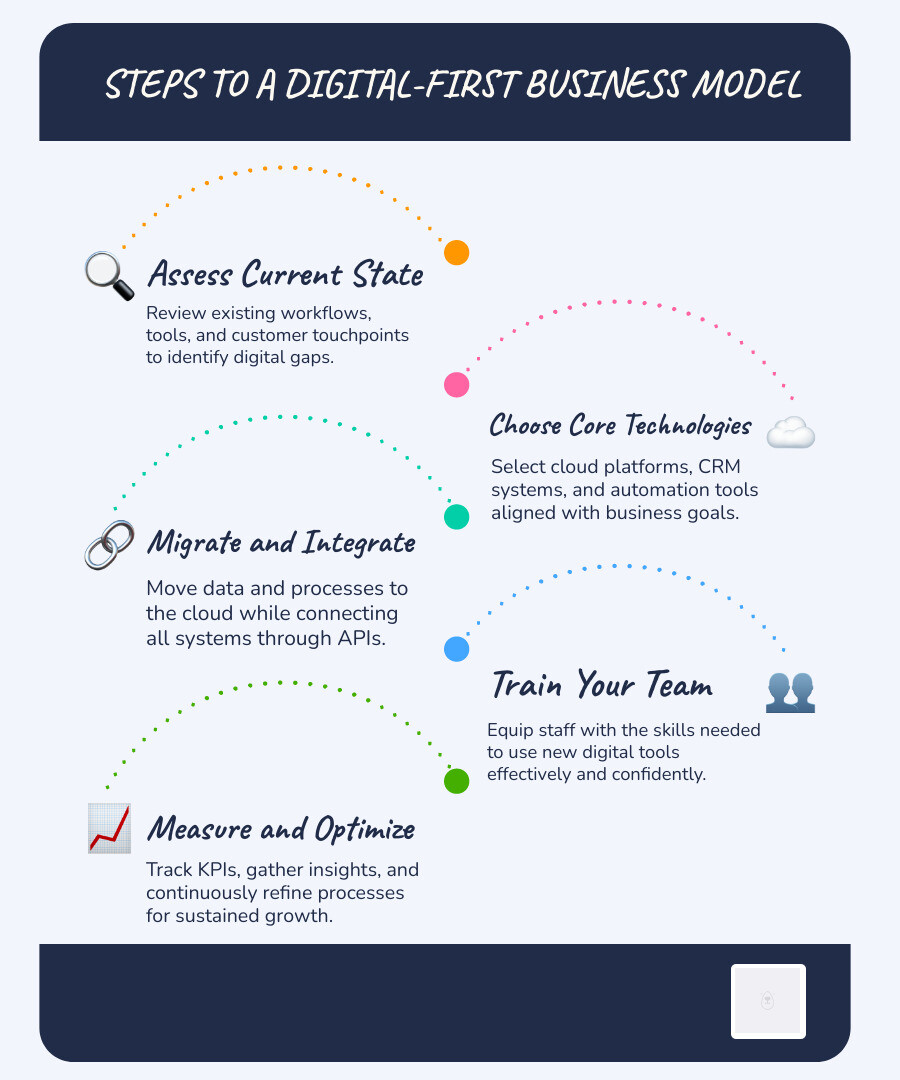
The modern business environment demands agility and responsiveness. Traditional business models, often rooted in physical operations and reactive technology adoption, are increasingly struggling to keep pace. The shift towards a digital-first approach marks a fundamental change in how businesses operate, strategize, and interact with their customers. This transformation isn’t merely about adopting new tools; it’s about reimagining core business processes to enhance operational efficiency and elevate the customer experience through technology.
What is a Digital-First Business?
At its core, a digital-first business is an organization that uses technology to drive every aspect of its operations. From sales and marketing to customer service and product development, digital tools and strategies are integrated into the foundational fabric of the business. Unlike traditional models where technology might be an add-on or a separate department, a digital-first approach embeds digital thinking into the company’s DNA.
This means that instead of merely digitizing existing manual processes, a digital-first business re-engineers its business workflows to be inherently digital. Cloud migration is often a critical component, moving infrastructure and applications to scalable, accessible cloud platforms. This allows for seamless data flow, remote collaboration, and the ability to adapt quickly to market changes. The focus is on creating a cohesive digital ecosystem where technology integration is paramount, ensuring that every touchpoint and internal operation is optimized for the digital age.
Five Key Traits of a Successful Digital-First Small Business
For small businesses, adopting a digital-first mindset can be particularly transformative, offering a pathway to compete effectively with larger enterprises. Successful digital-first small businesses typically exhibit several defining characteristics:
- Flexibility: They are inherently agile, capable of quickly adapting to new technologies, market demands, and customer preferences. This flexibility is often enabled by cloud-based solutions and modular technology stacks that can be scaled up or down as needed.
- Omnichannel Presence: These businesses provide a consistent and seamless customer experience across all digital and physical touchpoints. Whether a customer interacts via a website, social media, email, or in person, the experience is integrated and personalized.
- Customer-Centricity: Technology is leveraged to understand customer needs deeply and deliver exceptional, personalized experiences. This involves collecting and analyzing customer data to anticipate needs and tailor offerings.
- Data-Driven Decisions: Every strategic and operational decision is informed by data. From marketing campaign performance to sales trends and customer feedback, data analytics guide continuous improvement and innovation.
- System Integration: Rather than operating with a patchwork of disconnected tools, successful digital-first businesses prioritize integrating their systems. This ensures that data flows smoothly between different departments and applications, creating a unified view of operations and customers. This integration is crucial for avoiding tool overwhelm and maximizing efficiency, as two-thirds of small and medium-sized businesses (SMBs) report being overwhelmed by too many disparate tools.
Implementing Digital Solutions for Business Growth
The effective implementation of digital solutions is what truly unlocks scalability and business resilience. It involves carefully selecting and integrating a technology stack that supports strategic goals, rather than simply accumulating individual tools.
Leveraging Cloud-Based Technologies and CRM Platforms
Cloud computing has become the backbone of modern digital operations for small businesses. It offers unparalleled flexibility, allowing teams to work remotely and collaborate seamlessly. Cloud platforms eliminate the need for expensive on-premise hardware, converting large upfront investments into predictable operational expenses. This scalability is vital for growing businesses, enabling them to expand infrastructure as needed without significant capital outlay.
Central to leveraging cloud technologies are Customer Relationship Management (CRM) platforms. These systems are critical for organizing customer data, automating follow-ups, and providing a 360-degree view of every customer interaction. CRM platforms help businesses track leads, manage sales pipelines, and streamline customer service, ultimately driving growth by improving customer retention and acquisition. Notably, nearly nine in ten SMBs currently use CRM platforms, outpacing larger companies in adoption, recognizing their value in managing customer relationships effectively.
When considering essential digital tools for small businesses, we often recommend a foundational set that includes:
- Cloud Storage & Collaboration: Platforms like Google Workspace or Microsoft 365 for document sharing, email, and virtual meetings.
- CRM Software: Solutions like Salesforce or HubSpot to manage customer interactions and sales processes.
- Project Management Tools: Asana, Trello, or Monday.com for team collaboration and task tracking.
- Accounting Software: QuickBooks or Wave for financial management and invoicing.
- Marketing Automation: Mailchimp or Marketo for email campaigns and lead nurturing.
These tools, when integrated, form a powerful ecosystem. For businesses seeking to optimize their operations and make informed choices, implementing robust data-driven digital solutions is a non-negotiable step towards sustainable growth.

The Role of AI in Automating Workflows and Enhancing Customer Experiences
Artificial intelligence (AI) is rapidly transforming how small businesses operate, offering unprecedented opportunities to automate tasks and significantly improve customer experiences. AI tools can handle repetitive, time-consuming processes, freeing up human employees to focus on more strategic initiatives. For instance, AI-powered chatbots can manage customer inquiries 24/7, providing instant responses and resolving common issues, which is crucial given that 81% of customers want faster responses.
The impact of AI on productivity for SMBs is substantial, with studies indicating a potential increase of 40% by automating routine tasks. This allows employees to dedicate more time to complex problem-solving and creative endeavors. Over 71% of SMB marketing teams are already adopting AI to streamline operations, and 75% of SMBs currently invest in AI for tasks like data integration, automating workflows, and enhancing customer interactions. Intriguingly, growing SMBs are 1.8 times more likely to invest in AI compared to those in decline, highlighting its role as a growth accelerator.
AI also plays a pivotal role in enhancing customer experiences through personalization. By analyzing customer data, AI can tailor product recommendations, marketing messages, and service interactions, meeting the expectation of 71% of consumers for personalized interactions.
To illustrate the transformative power of AI, consider the distinction between traditional automation and AI growth engines:
Feature Traditional Automation AI Growth Engine Nature Static, rule-based, executes predefined tasks Dynamic, adaptive, learns from data and interactions Memory No memory, repeats tasks identically Learns from past actions, adjusts behavior, gets “smarter” daily Decision Making Follows fixed rules Improves decision pathways based on observed outcomes and optimization Improvement Consistent execution of defined process Compounds improvements over time through continuous learning and refinement Complexity Best for simple, repetitive tasks Handles complex workflows, identifies leaks, optimizes various business functions Output Predictable, consistent Self-optimizing, leads to exponential results over time Data-Driven Decision Making with Digital Solutions for Business Growth
In July 2026, data is undeniably the new currency of business. Data-driven decision-making is paramount for achieving business scalability and resilience. By collecting, analyzing, and interpreting data from various digital solutions—including CRM platforms, marketing analytics, sales figures, and customer feedback—businesses gain profound insights into their operations and customer behavior.
These insights enable businesses to identify trends, predict future outcomes, and optimize strategies across marketing, sales, and customer service. Key Performance Indicators (KPIs) become measurable benchmarks, allowing leaders to understand what’s working and what isn’t, and to pivot quickly when necessary. Predictive analytics, powered by AI, can forecast demand, identify potential customer churn, and even optimize pricing strategies. This proactive approach fosters resilience, allowing businesses to anticipate challenges and capitalize on opportunities. Making decisions based on solid data, rather than intuition alone, significantly increases the likelihood of sustained growth and market competitiveness.
Navigating Tool Overwhelm and System Integration
While the proliferation of digital tools offers immense potential, it also presents a significant challenge: tool overwhelm. As noted, two-thirds of SMBs report being overwhelmed by too many tools, often leading to data silos, inefficient workflows, and increased operational costs. The solution lies not in avoiding new technologies, but in prioritizing system integration and choosing platforms that offer comprehensive, unified solutions.
Instead of adopting a new tool for every specific need, businesses should seek integrated systems where applications share data smoothly. This often involves leveraging Application Programming Interfaces (APIs) to connect disparate software or opting for all-in-one platforms that consolidate various functions—such as CRM, marketing automation, and analytics—into a single ecosystem. Centralized governance over these integrated systems ensures data consistency, reduces manual data entry, and provides a holistic view of business operations. The goal is to create a cohesive digital environment that streamlines workflows, reduces friction, and allows teams to focus on strategic tasks rather than managing a complex array of disconnected software.
Building a Strong Online Presence and Local Visibility
In today’s digital landscape, a strong online presence is non-negotiable for business growth. It’s how customers discover, interact with, and ultimately choose your business. This presence extends beyond a simple website to encompass search engine optimization (SEO), social media engagement, and localized digital strategies.
Optimizing Local Search with Digital Solutions for Business Growth
For many small businesses, especially those with physical locations or serving specific geographic areas, local SEO is a critical component of their digital strategy. Optimizing for local search ensures that your business appears prominently when potential customers in your vicinity search for products or services you offer.
The cornerstone of local SEO is a well-maintained Google Business Profile (GBP). This free listing allows you to control how your business appears on Google Search and Maps, including your address, phone number, hours, website, and customer reviews. Regular updates, high-quality photos, and consistent information across all online directories are crucial.
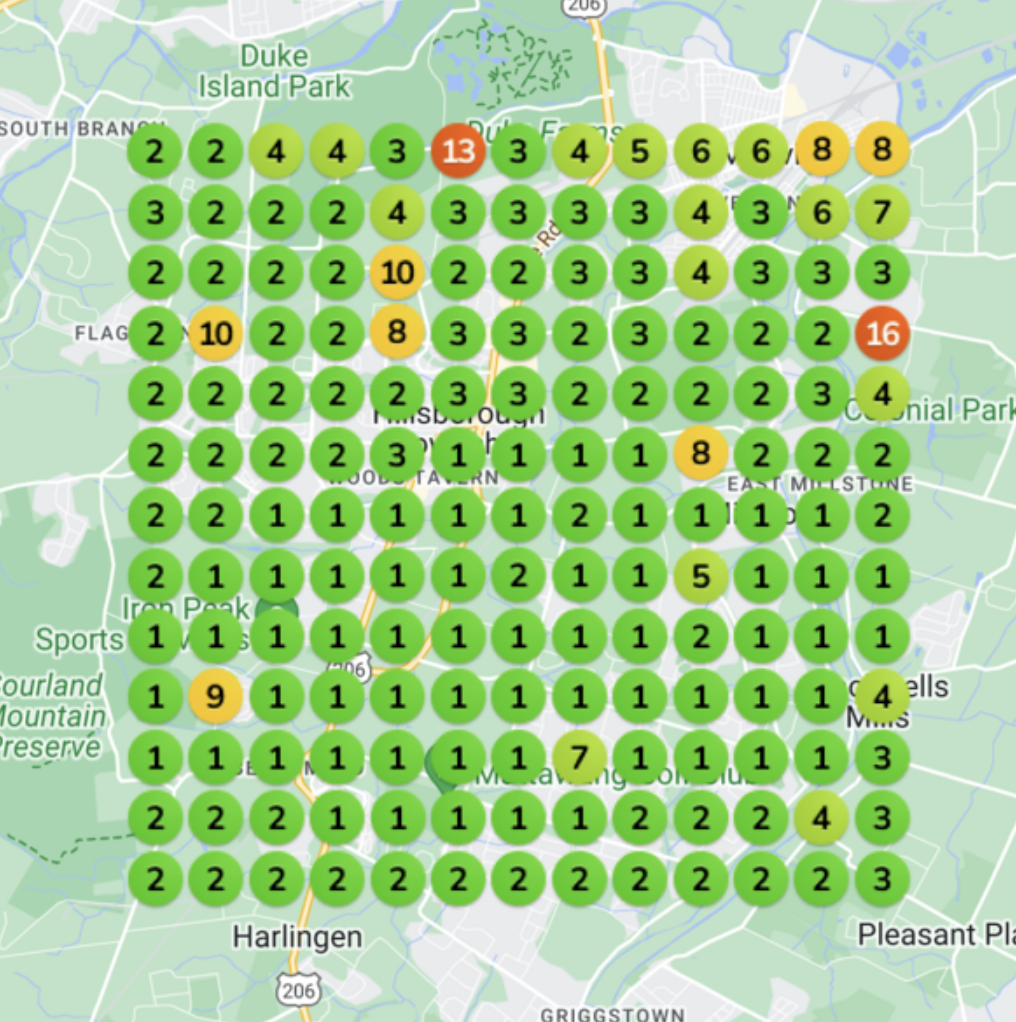
Beyond basic GBP optimization, advanced digital solutions can significantly enhance local visibility. Tools like the GBP Audit Tool by Paige, the ProfilePro Chrome extension, and the Heatmap Audit Tool provide invaluable insights into your local search performance. These tools can help identify areas for improvement, track keyword rankings in specific geographic zones, and monitor competitor activity. Leveraging automated reputation management and local SEO through Paige AI review solutions can further streamline the process, ensuring positive customer feedback is highlighted and any negative reviews are addressed promptly, which directly impacts your local search ranking and customer trust.
Boosting Online Sales with Ecommerce and Integrated Marketing
For many businesses, establishing an ecommerce store is a direct path to boosting online sales and expanding market reach. An ecommerce platform allows a business to operate 24/7, serving customers beyond geographical limitations. With ecommerce expected to drive 54% of small business revenue by 2025, its adoption is no longer optional for growth-oriented SMBs.
The success of an ecommerce store is significantly amplified by integrated marketing strategies. Omnichannel marketing ensures a seamless customer journey across all touchpoints—from social media ads and email campaigns to the website and post-purchase follow-ups. Integrating sales, marketing, and customer service functions creates a cohesive experience, where customer data from one channel informs interactions in another. For instance, a customer’s browsing history on your website can trigger personalized email recommendations or targeted social media ads.
Furthermore, integrating custom mobile app digital solutions can provide an even more personalized and convenient shopping experience. A dedicated mobile app can offer exclusive deals, push notifications for promotions, and streamline the checkout process, fostering stronger customer loyalty and repeat purchases. This holistic approach ensures that every marketing effort and sales interaction contributes to a unified brand message and a superior customer experience.
Frequently Asked Questions about Digital Solutions
As businesses embark on their digital transformation journey, several common questions often arise. Addressing these can help clarify expectations and guide strategic planning.
What is the ROI of investing in digital business solutions?
The Return on Investment (ROI) of investing in digital business solutions can be substantial, though it varies based on the specific solutions adopted and the effectiveness of their implementation. Generally, ROI measures the profitability of an investment by comparing financial gains to total costs. The formula for calculating ROI is:
ROI = ((Total Benefits – Total Costs) / Total Costs) x 100
Total benefits can include increased revenue from expanded market reach (e.g., ecommerce), improved conversion rates (e.g., AI-powered lead nurturing), cost savings from automation (e.g., reduced manual tasks, lower operational overhead), and enhanced customer loyalty leading to repeat business. Total costs encompass software subscriptions, implementation fees, employee training, and any necessary infrastructure upgrades. While some benefits, like improved customer experience, can be harder to quantify directly, their long-term impact on brand reputation and customer lifetime value is significant. Many businesses report substantial ROIs, with AI alone capable of increasing productivity by 40% for SMBs.
How long does it take to implement digital solutions in a small business?
The implementation timeline for digital solutions in a small business can vary significantly, ranging from a few weeks for simple tools to several months for more complex, integrated systems. Factors influencing this timeline include the complexity of the solution, the scope of the project, and the organization’s readiness for change.
A typical implementation process often involves several phases:
- Planning (2-4 weeks): Defining objectives, assessing current tech stack, identifying pain points, and researching suitable solutions.
- Configuration (3-6 weeks): Setting up the software, customizing workflows, and integrating with existing systems.
- Testing (2-4 weeks): Piloting the solution, identifying bugs, and ensuring functionality meets requirements.
- Employee Training & Change Management (Ongoing): A crucial phase that involves educating staff on new tools and processes, addressing resistance to change, and ensuring widespread adoption.
Digital transformation is often an ongoing process, not a one-time project. Continuous adaptation and optimization are key to maximizing the value of digital investments.
How do AI growth engines differ from traditional automation?
While both AI growth engines and traditional automation aim to streamline processes, their underlying mechanisms and capabilities differ significantly. Traditional automation typically involves static, rule-based systems that execute predefined tasks in the same way every time. Think of it as a set of instructions that a machine follows without deviation or learning. For example, an automated email sequence that sends a series of messages based on a fixed trigger.
In contrast, AI growth engines are dynamic, adaptive systems that learn from data and interactions. They don’t just execute tasks; they observe activity, evaluate what’s working, improve decision pathways, and optimize engagement over time. This means an AI growth engine can adjust its behavior based on past results, making it smarter and more effective with each cycle. For instance, an AI-powered lead nurturing system might modify its messaging or timing based on a lead’s engagement patterns, continuously improving conversion rates. This compounding performance is a key differentiator, allowing AI growth engines to deliver exponential improvements compared to the linear gains of static automation.
Conclusion
As we look towards the future from July 2026, the imperative for businesses to embrace digital solutions for growth is clearer than ever. Becoming a digital-first organization is about more than just adopting new technologies; it’s about a fundamental shift in mindset and operations, prioritizing flexibility, customer-centricity, and data-driven decision-making.
By strategically leveraging cloud-based technologies, CRM platforms, and the transformative power of AI, small businesses can automate workflows, enhance customer experiences, and make informed decisions that drive scalability and resilience. Building a strong online presence through optimized local SEO, robust ecommerce, and integrated marketing further solidifies a business’s position in a competitive market.
The journey of digital transformation requires continuous adaptation and a commitment to integrating systems rather than just accumulating tools. By addressing challenges like tool overwhelm and understanding the unique advantages of AI growth engines, businesses can future-proof their operations and achieve strategic growth. The digital age is here, and by embracing these solutions, businesses can not only keep up but also lead the way, transforming every interaction into an opportunity for sustained success.

0 Comments