

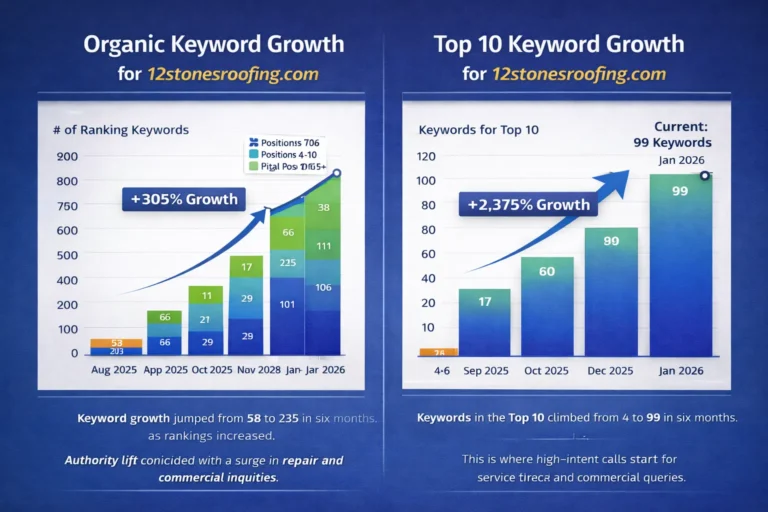
The Core Pillars of Roofing Digital Marketing
To effectively capture the modern roofing market, a multi-channel digital marketing approach is indispensable. Think of your digital strategy as a robust structure, much like a well-built roof, with several interconnected pillars supporting its overall strength and longevity. These pillars include search engine optimization (SEO), pay-per-click (PPC) advertising, social media engagement, and cultivating local brand awareness. Each plays a crucial role in driving lead generation and ultimately, securing high-value roofing projects.
While PPC and social media offer immediate visibility and targeted reach, organic search remains a foundational driver of traffic and trust. According to the latest HubSpot State of Marketing Report, organic search continues to be the leading source of website traffic, underscoring its enduring importance. This means that appearing prominently when potential customers search for roofing services is not just a bonus, but a necessity. By strategically combining these elements, we can build a comprehensive marketing roadmap tailored to your business goals.
Why Local Visibility Matters for Roofing Contractors
For roofing contractors, local visibility isn’t just important; it’s paramount. The vast majority of your clients, whether residential homeowners or commercial property managers, are located within a specific geographic service area. When a homeowner experiences a leaky roof or a business needs a commercial roof replacement, their search intent is inherently local. They’re not looking for a national provider; they’re searching for “roofing contractor near me,” “roof repair [city name],” or “commercial roofing services [local area].”
This localized search behavior means that appearing at the top of local search results directly connects you with high-intent leads who are ready to make a hiring decision. Geographic targeting ensures that your marketing efforts reach the right audience – those within your operational footprint who genuinely need your services. Whether it’s securing lucrative commercial roofing contracts or a steady stream of residential roof replacement leads, a strong local presence is the bedrock of consistent business growth. A comprehensive roofing SEO guide will always emphasize this local focus as the primary driver for attracting relevant customers.
Integrating SEO into Your Roofing Digital Marketing Plan
Integrating SEO into your broader digital marketing plan is about building a sustainable, long-term asset for your roofing business. Unlike paid advertising, which stops generating leads the moment your budget runs out, a well-optimized website and online presence continue to attract organic traffic over time. This involves several key components:
- On-Page Optimization: This refers to optimizing elements directly on your website. It includes crafting compelling, keyword-rich content for your service pages (e.g., “residential roof repair,” “commercial roof installation,” “gutter services”), optimizing title tags, meta descriptions, and header tags, and ensuring your website’s internal linking structure is logical and user-friendly. For roofers, this often means creating dedicated pages for each service and the specific areas you serve.
- Keyword Research: Identifying the precise terms your potential customers are using to find roofing services is crucial. This goes beyond generic terms to include local-specific keywords (e.g., “emergency roof repair [city name]”), long-tail keywords (e.g., “cost to replace asphalt shingles in [neighborhood]”), and service-specific terms. Effective keyword research informs all your content and optimization efforts.
- Technical Site Health: A fast, secure, and easily crawlable website is essential for SEO. This involves ensuring mobile responsiveness (as most local searches happen on mobile devices), optimizing site speed, implementing secure HTTPS protocols, and maintaining a clean site architecture that search engines can easily understand.
- User Experience (UX): Google increasingly prioritizes websites that offer a positive user experience. For a roofing contractor, this means a website that is easy to navigate, visually appealing (showcasing your work with high-quality images and videos), provides clear calls to action, and loads quickly. A good UX keeps visitors on your site longer and encourages them to contact you, directly impacting your lead generation strategies.
By meticulously addressing these SEO components, we lay a strong foundation that supports all other digital marketing efforts, ensuring your roofing business is discoverable, credible, and ready to convert visitors into valuable leads.
Dominating Local Search with Google Maps SEO
In the realm of local service businesses like roofing, appearing prominently in Google Maps is arguably more critical than traditional organic search results. When a homeowner or business manager searches for a local service, Google often displays the “Local 3-Pack” – a block of three business listings directly above the organic search results, complete with map pins, ratings, and contact information. This prime real estate is where immediate, high-intent leads are captured.
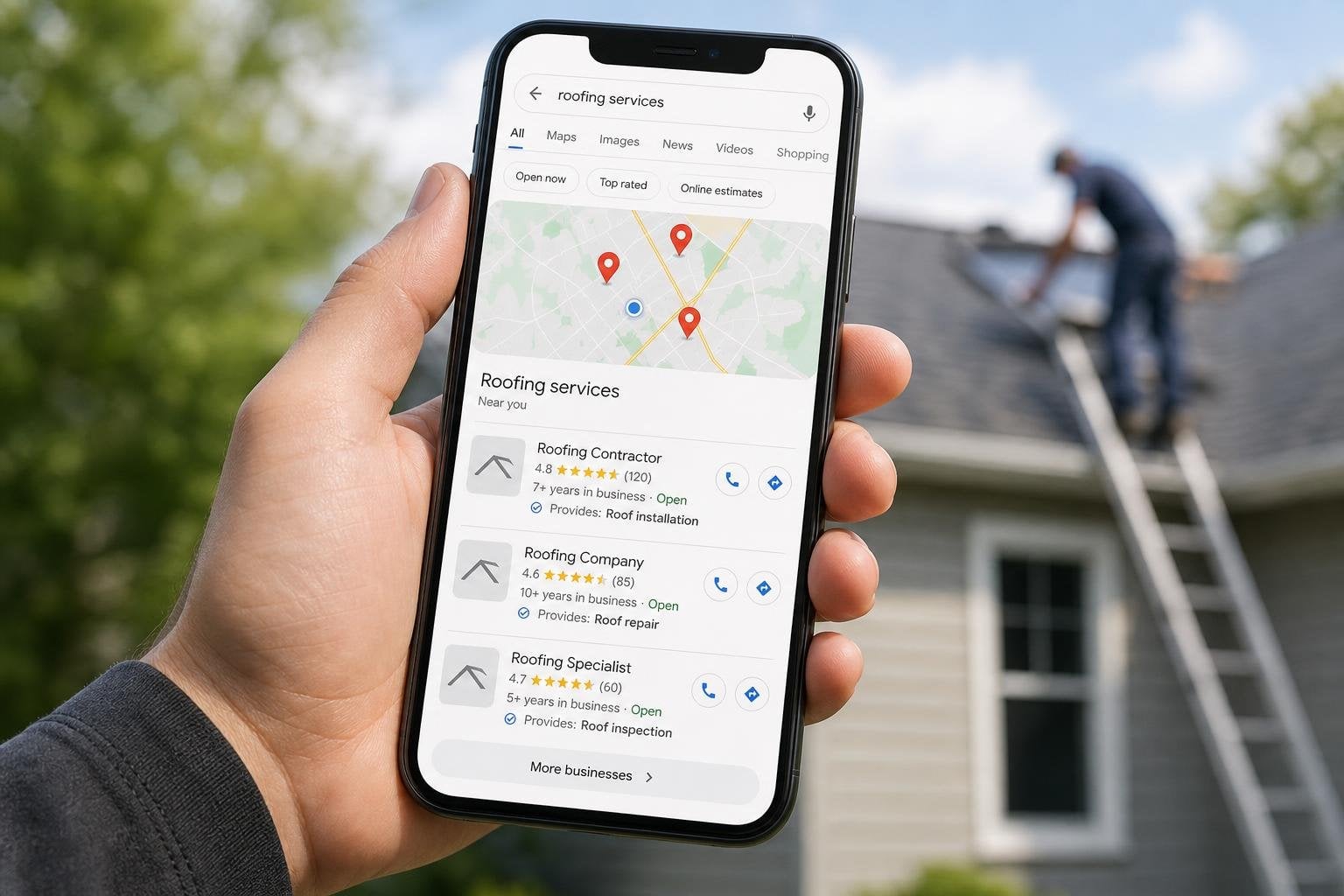
Google ranks these local results based on three primary factors:
- Relevance: How well your business profile matches the user’s search query. This means having accurate and comprehensive information about your services.
- Distance: How far your business is from the searcher’s location. While you can’t change your physical address, optimizing your service area settings is key.
- Prominence: How well-known and authoritative your business is. This is influenced by factors like review count, online citations, and backlinks.
For roofing contractors, effective Google Maps local SEO for roofers is critical for capturing immediate search intent. It directly translates to phone calls, website visits, and driving directions. Our experience with clients has shown that focusing on map pack dominance yields significant and proven local SEO results. For service area businesses, properly configuring your Google Business Profile to define your service regions without displaying a physical address at a client’s home is crucial for compliance and effectiveness.
Ranking Type Impact on Clicks (Approximate) Google Maps 3-Pack 40-50% Organic Search (Top 3) 30-35% Organic Search (Positions 4+) 15-20% Optimizing Your Google Business Profile for Maximum Reach
Your Google Business Profile (GBP), formerly Google My Business, is the cornerstone of your Google Maps SEO strategy. It acts as your digital storefront on Google Search and Maps, providing potential customers with all the essential information they need at a glance. Optimizing this profile is an ongoing process that requires attention to detail.
- Profile Verification: The first and most crucial step is to claim and verify your GBP. This typically involves receiving a postcard with a verification code at your business address. Without verification, your profile won’t be fully active or visible.
- Primary and Secondary Categories: Accurately selecting your business categories is vital for relevance. Your primary category should be “Roofing Contractor,” but you can add secondary categories like “Roof Repair Service,” “Gutter Installation Service,” or “Commercial Roofing Contractor” to broaden your reach.
- Business Description Optimization: Craft a compelling and keyword-rich business description (up to 750 characters). Lead with your most important information in the first 250 characters. Include your core services, unique selling propositions, and target local keywords naturally. Avoid keyword stuffing or adding irrelevant information.
- Google Business Profile Guidelines: Adhering to Google’s guidelines is non-negotiable, especially for service area businesses. Ensure your business name is your actual legal business name, avoid adding unnecessary keywords to it, and accurately represent your services. For businesses that operate out of a home office or don’t have a physical storefront customers visit, setting up your GBP as a service area business (hiding your address) is essential.
- Adding High-Quality Project Photos: Visuals are incredibly powerful. Upload high-resolution photos of your completed roofing projects, your team in action, your equipment, and your branded vehicles. These images build trust and showcase the quality of your work. Geo-tagging these photos with your service locations can also provide additional local relevance signals.
- Seasonal Google Posts: Utilize Google Posts to share updates, promotions, new services, or seasonal offers (e.g., “Winter Roof Inspection Special,” “Spring Gutter Cleaning”). These posts keep your profile fresh, engage potential customers, and can include calls to action.
For businesses seeking to climb the Google Maps tree and boost their local search visibility, investing in tailored digital marketing services can provide the specialized expertise needed to ensure every aspect of your Google Business Profile is meticulously optimized. This level of detail ensures maximum reach and converts local searchers into valuable leads.
Leveraging Reviews as a Trust Signal in Roofing Digital Marketing
In the competitive roofing industry, customer reviews are gold. They serve as powerful trust signals, influencing potential clients more than almost any other factor. Statistics show that nearly all consumers read online reviews before making a purchasing decision, and many actively seek out negative reviews to gauge a business’s responsiveness. Therefore, actively managing and leveraging reviews is a critical component of your Google Maps SEO and overall digital marketing strategy.
- Review Velocity and Diversity: Google values businesses that consistently receive new reviews (velocity) and reviews from various sources (diversity). While Google reviews are paramount for Maps ranking, encouraging reviews on other platforms like Yelp, Facebook, or industry-specific sites also builds overall online prominence.
- Responding to Positive and Negative Feedback: Always respond to every review, both positive and negative. Thank positive reviewers for their feedback, reinforcing their choice and encouraging others. For negative reviews, respond professionally, empathetically, and offer to resolve the issue offline. This demonstrates excellent customer service and transparency to potential clients.
- Keyword-Rich Review Responses: While not the primary goal, subtly incorporating relevant keywords into your responses can sometimes provide additional context to Google about your services and service areas. For example, “We’re so glad we could help with your roof repair in [city]!”
- Reputation Management for Home Services: Proactive reputation management involves monitoring all review platforms, responding promptly, and actively soliciting new reviews. This builds a positive online image and mitigates the impact of occasional negative feedback.
- Building Customer Trust: A strong collection of positive reviews builds immense trust. It shows that your roofing business is reliable, delivers quality work, and cares about its customers. This trust is a powerful differentiator in a crowded market.
- Automated Review Request Workflows: Implementing systems to automate review requests can significantly boost your review count. After completing a job, a simple text message or email with a direct link to your Google review page makes it easy for satisfied customers to leave feedback.
By prioritizing review management, your roofing business not only enhances its Google Maps ranking but also cultivates a reputation for excellence that attracts and converts more clients.
Advanced Lead Generation Tactics for Roofers
Beyond the foundational elements of Google Business Profile optimization and review management, several advanced strategies can significantly amplify your roofing company’s local search presence and lead generation. These tactics delve deeper into building authority, proving service area activity, and leveraging structured data.

These advanced strategies, including local link building, community sponsorships, digital PR, schema markup, and sophisticated local citation building, are often best implemented with the guidance of experts. Engaging with a specialized agency can help your business implement these advanced local SEO strategies effectively, ensuring they are tailored to the unique demands of the roofing industry.
Local Citations and Directory Consistency
Local citations are online mentions of your business’s Name, Address, and Phone number (NAP). These can appear on business directories (like Yelp, Yellow Pages, or Angi), social media platforms, industry-specific websites, and local news sites. Consistency across all these listings is paramount for local SEO.
- NAP Consistency: Google cross-references your NAP information across the web to verify your business’s legitimacy and accuracy. Any discrepancies (even minor ones like “St.” vs. “Street” or different phone number formats) can confuse search engines and dilute your local ranking signals. We meticulously ensure that your business name, address, and phone number are identical across every online mention.
- Local Business Directories: Submitting your business to relevant local and industry-specific directories is a fundamental step. For roofing contractors, this might include directories for home services, construction, or local chambers of commerce.
- Yelp, Nextdoor, and Angi: While Google is the primary focus, maintaining active and consistent profiles on popular platforms like Yelp, Nextdoor, and Angi (formerly Angie’s List) is also beneficial. These sites are often consulted by homeowners and can drive direct leads, in addition to contributing to your overall online prominence.
- Data Aggregator Submissions: Submitting your NAP data to major data aggregators (like Factual, Infogroup, and Localeze) ensures your information is distributed widely across many smaller directories and online services, further cementing consistency.
- Citation Audits: Regular citation audits are essential to identify and correct any inconsistent or inaccurate listings. This process helps maintain a clean online footprint and prevents potential ranking penalties.
By systematically building and maintaining consistent local citations, your roofing business reinforces its local presence, builds trust with search engines, and increases its overall online visibility.
Jobsite Check-ins and Schema Markup
This is where your roofing business can truly differentiate itself and provide undeniable proof of its service area activity to search engines. “Jobsite check-ins” involve documenting your work in real-time at actual job locations, often using geo-tagged photos and specialized schema markup.
- Real-Time Jobsite Check-ins: Imagine your crew completing a roof repair in a specific neighborhood. With a system for jobsite check-ins, they can use a mobile app to take a geo-tagged photo of the completed work, add a brief description of the service performed, and instantly “check-in” at that location. This creates a digital footprint of your actual work, proving to Google that you are actively serving specific areas.
- Geo-Tagged Photos: Photos taken with a smartphone often include metadata (EXIF data) that contains the exact GPS coordinates of where the photo was taken. Uploading these geo-tagged photos to your website, Google Business Profile, and social media provides concrete evidence of your presence in various service locations.
- Local Business Schema: Schema markup is a form of structured data that you can add to your website’s HTML to help search engines better understand the information on your pages. For roofing contractors, implementing “LocalBusiness” schema on your website, along with specific service schemas (e.g., “RoofingService”), can highlight your business details, service areas, and types of services offered. When combined with jobsite check-ins, this schema can be used to mark up each completed project with its specific location and service details.
- Structured Data: By consistently using structured data for your jobsite check-ins, you’re providing Google with clear, machine-readable signals about your expertise and service footprint. This helps search engines confidently associate your business with specific geographic areas and types of roofing work.
- Proving Service Area Activity to Search Engines: For service area businesses, proving you operate in various locations can be challenging. Jobsite check-ins are a powerful solution. Each check-in acts as a “digital pin” on the map, demonstrating to Google that your business is actively performing roofing services across your defined service area, not just from your office location.
- Uncopyable Local Content: This type of content – authentic, geo-tagged photos and descriptions of real jobs – is virtually impossible for competitors to replicate. It’s unique, high-quality, and directly relevant to local search, making it a powerful and sustainable competitive advantage.
By integrating jobsite check-ins with appropriate schema markup, your roofing business can build an undeniable portfolio of local service activity, significantly boosting your prominence and relevance in Google Maps results and solidifying your position as a leading local contractor.
Frequently Asked Questions About Roofing Marketing
Navigating the complexities of digital marketing can raise many questions for roofing business owners. Here, we address some of the most common inquiries regarding local search and the return on investment (ROI) for marketing efforts. Understanding these aspects is crucial for setting realistic expectations and making informed decisions about your marketing strategy.
How long does it take to see results from local SEO?
SEO is a long-term strategy, not a quick fix. While some initial movements can be observed relatively quickly, significant results typically unfold over several months.
- Initial Map Pack Movement: For Google Maps and the Local 3-Pack, we often see initial improvements in rankings within 90 to 120 days. This period allows for Google to crawl and index your optimized Google Business Profile, process new reviews, and recognize consistent NAP data.
- Maximum ROI: To achieve maximum return on investment and truly dominate local search results, a commitment of 4 to 6 months is generally required. This timeframe allows for comprehensive optimization, consistent content creation, sustained review generation, and the building of local authority.
- Competitive Market Variables: The exact timeline can vary depending on the competitiveness of your local market. In highly saturated areas, it may take a bit longer to climb the ranks compared to less competitive regions. Consistent effort and adaptation are key.
It’s important to view local SEO as an investment that compounds over time, delivering sustainable lead generation long after initial efforts are made.
Should I manage my digital marketing in-house or hire an agency?
The decision to handle digital marketing in-house or outsource to a professional agency depends on several factors, including your available resources, expertise, and growth ambitions.
- DIY Marketing Limitations: While basic tasks like updating your Google Business Profile can be done in-house, effective digital marketing for roofers involves a complex blend of technical SEO, content strategy, link building, reputation management, and analytics. Without dedicated expertise, you might miss critical opportunities or even inadvertently harm your online presence.
- Technical SEO Complexity: Aspects like schema markup, site speed optimization, mobile responsiveness, and resolving crawl errors require specialized knowledge that most roofing contractors don’t possess.
- Opportunity Cost of Time: Managing marketing effectively is a full-time job. For a roofing business owner, diverting time from core operations (managing projects, supervising crews, client relations) to learn and implement complex SEO strategies can be a significant opportunity cost.
- Professional Agency Advantages: An agency brings specialized expertise, industry-specific insights, access to advanced tools, and a dedicated team focused solely on your online growth. They can navigate algorithm updates, implement best practices efficiently, and scale operations as your business grows. For businesses seeking to scale operations and achieve aggressive growth targets, partnering with an agency often proves to be a more efficient and effective path.
While some basic tasks can be managed in-house, a professional agency can provide the strategic direction and technical execution needed to achieve superior results and allow you to focus on what you do best – roofing.
What is the most cost-effective lead generation strategy for roofers?
When evaluating lead generation strategies for roofers, it’s crucial to consider both immediate costs and long-term value.
- Organic Local SEO vs. Paid Ads: Pay-per-click (PPC) advertising offers immediate visibility and leads, but it’s an ongoing expense. The moment you stop paying, the leads stop flowing. Organic local SEO, on the other hand, builds a sustainable digital asset. While it requires an initial investment of time and resources, once established, it continues to generate leads at a much lower marginal cost over time.
- Long-Term Compounding Value of SEO: A high-ranking Google Business Profile and an optimized website will consistently attract free, high-quality organic traffic. This compounding effect means that your investment in SEO continues to pay dividends long into the future, making it incredibly cost-effective over the long term.
- Cost-Per-Lead Comparison: While a PPC campaign might yield leads for a specific cost per lead, the cost per lead from organic SEO typically decreases over time as your rankings improve and traffic grows. This often makes organic local SEO the more cost-effective strategy for sustainable growth.
- Building Sustainable Digital Assets: SEO efforts contribute to building your brand’s authority, credibility, and overall digital footprint – assets that continue to benefit your business even if specific campaigns change.
For most roofing contractors aiming for sustainable growth and a strong return on investment, a robust organic local SEO strategy, particularly focused on Google Maps, represents the most cost-effective lead generation approach. It’s about building a digital infrastructure that continuously attracts customers to your business.
Conclusion
In the dynamic landscape of July 2026, a powerful digital presence is no longer optional for roofing contractors; it’s the bedrock of sustained success. We’ve explored how a multi-faceted digital marketing strategy, anchored by comprehensive Google Maps SEO, can transform your lead generation efforts. From meticulously optimizing your Google Business Profile and leveraging the persuasive power of customer reviews to implementing advanced tactics like local citations and jobsite check-ins, each step contributes to building an unassailable online authority.
The compounding value of local search dominance means that your investment today will continue to attract high-intent leads for years to come, offering a superior return compared to fleeting traditional advertising. By taking decisive action to secure your digital territory, you position your roofing business not just to compete, but to thrive and expand.
If you’re ready to scale your roofing business and ensure it stands out in your local market, we encourage you to contact CinchLocal for a personalized consultation. Let us help you craft a tailored digital marketing strategy that drives tangible results and secures your place at the top of the search results.

0 Comments