

Key Takeaways
- Buy for the jobs the truck will actually do most often, not for the biggest rating on the window sticker.
- Match towing capacity and payload to your loaded trailer, passengers, tools, and accessories.
- Inspect condition, service history, title status, and financing costs before committing.
- Choose a cab, bed, engine, and drivetrain that work for both weekday driving and occasional demanding tasks.
A used pickup can be a practical one-vehicle solution for commuting, family travel, jobsite supplies, outdoor equipment, and towing. The right choice depends less on brand image and more on how the truck fits your normal routine. Shoppers comparing autos and trucks should begin with a clear list of priorities before looking at trim packages, lift kits, or advertised maximum tow ratings. That approach helps prevent two expensive mistakes: buying a truck that is too small for the work, or paying for heavy-duty capability that is rarely used. A thoughtful comparison also makes it easier to recognize when a clean, well-maintained midsize truck is a better fit than a larger model with higher operating costs.
Start With the Truck’s Main Job
Write down the jobs the truck will handle in a typical month. Include daily commuting, carrying tools or materials, towing a boat or camper, hauling recreation gear, transporting children or coworkers, and driving on unpaved or snowy roads. Be honest about frequency. Someone who carries a few tools twice a month may be happier with a maneuverable pickup, while a contractor who tows equipment most workdays needs a more capable configuration.
Also consider where the truck will live. Measure garage depth, driveway width, parking spaces, and any tight gates or jobsite entrances. A truck that meets every towing goal but is frustrating to park or load can become an unnecessary burden.
Compare Pickup Sizes
Midsize Pickups
Midsize pickups are often easier to park, fit more comfortably in urban areas, and can suit light towing, home projects, camping gear, and everyday transportation. Their trade-offs may include less rear-seat space, shorter beds, and lower maximum towing or payload ratings than larger trucks. They make the most sense when daily usability matters as much as cargo capacity.
Full-Size Pickups
Full-size half-ton pickups commonly provide a balanced combination of passenger room, bed space, ride comfort, and towing capability. They can work well for owners who need one vehicle for family driving, regular hauling, and moderate trailer use. However, ratings can differ substantially within the same model because engine, cab, bed length, axle ratio, drivetrain, and factory towing equipment all matter.
Heavy-Duty Pickups
Heavy-duty models are built for buyers who frequently tow large trailers, carry substantial loads, use fifth-wheel equipment, or depend on a truck for commercial work. They can bring larger tires, increased fuel consumption, a larger turning radius, and potentially higher repair costs. Do not assume a heavier truck is automatically safer or more useful for every task. It should match a real need.
Understand Towing and Payload
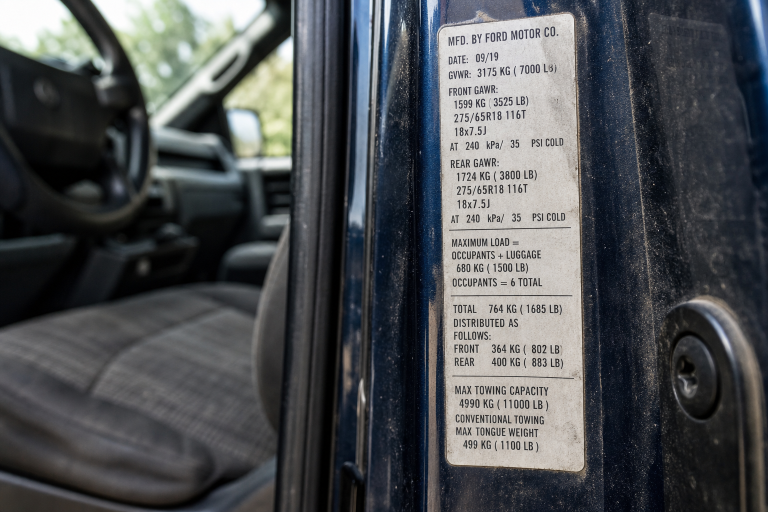
Towing capacity refers to the maximum trailer weight a properly equipped truck may pull. Payload is the weight carried by the truck itself, including people, cargo in the cab and bed, hitch weight, toolboxes, bed covers, and aftermarket accessories. A trailer can be within the advertised towing limit while the truck is still overloaded on payload. Check the specific truck’s door-jamb labels, owner’s manual, and manufacturer information rather than relying on an online listing. Leave room below the maximum ratings, especially if the truck will regularly carry passengers, equipment, or cargo. Modifications such as larger tires, suspension lifts, and added equipment should also be considered before loading the truck.
Choose the Engine, Drivetrain, Cab, and Bed
Gas engines can be a sensible choice for mixed driving, shorter trips, and occasional towing. Diesel engines are often chosen by drivers who frequently tow heavy loads, but an incomplete maintenance history can make repairs to diesel emissions, cooling, turbocharger, and transmission systems costly. Turbocharged and hybrid powertrains may offer strong performance or improved efficiency in certain driving patterns, yet their condition and service records matter more than the powertrain label alone. Two-wheel drive may reduce purchase cost and mechanical complexity, while four-wheel drive adds traction for loose surfaces, snow, and some work environments. Test four-wheel-drive engagement before purchase, and remember that it does not replace appropriate tires, cautious driving, or safe towing practices. Regular, extended, and crew cabs involve different compromises. A crew cab improves rear-passenger space but may limit bed length or increase overall length. Short beds can simplify parking, standard beds provide a middle ground, and long beds are useful for lumber, equipment, and recurring work cargo. Measure common loads before deciding.
Inspect the Truck Before Buying
Look underneath for frame corrosion, damaged suspension components, fluid leaks, and evidence of poor repairs. Inspect wheel wells, rocker areas, the bed floor, hitch receiver, trailer wiring, bumper, and tailgate. Mismatched paint, uneven body gaps, or fresh undercoating in isolated areas can warrant closer scrutiny of prior damage. During a test drive, start the truck cold if possible and listen for unusual noises. Drive on city streets, rough pavement, and at highway speed. Watch for steering pull, brake vibration, suspension clunks, transmission hesitation, warning lights, smoke, or unusual odors. Test the heating, air conditioning, cameras, windows, lights, infotainment, cruise control, and driver-assistance features. An independent pre-purchase inspection is worthwhile when available.
Review History, VIN, and Recalls
Mileage alone does not show how a pickup was treated. Review title status, accident information, flood or salvage history, odometer consistency, commercial use, ownership changes, and maintenance records. Compare the odometer with service paperwork, tire wear, interior condition, and inspection records. Before signing, use the VIN to check whether the truck needs a recall repair. Open safety recalls deserve attention before delivery, especially when they involve braking, steering, airbags, electrical systems, or fire risk.
Calculate the Full Cost of Ownership
The purchase price is only the starting point. Build a budget for sales tax, registration, insurance, fuel, tires, brakes, maintenance, repairs, towing equipment, and a first-year repair reserve. Large wheels, aggressive tires, lift kits, and aftermarket engine tuning can affect ride quality, wear items, insurance, and future repair decisions. If financing is involved, compare offers using the annual percentage rate, loan term, and total amount financed, not just the monthly payment. A longer term can make the payment look easier while increasing the interest paid over the life of the loan. Review fees, optional products, warranty terms, and prepayment provisions before agreeing to the contract.
Final Buying Checklist
- Define the truck’s primary jobs and realistic towing needs.
- Confirm the exact payload and towing ratings for that configuration.
- Choose the cab, bed, engine, and drivetrain for daily life as well as work.
- Inspect the frame, tires, brakes, suspension, drivetrain, hitch, and electronics.
- Review the VIN, title, service history, recalls, and condition with an independent mechanic.
- Set a total budget that includes ownership costs and financing interest.
- Walk away when the truck cannot meet safety, work, or budget requirements.
Conclusion
The best used pickup is not necessarily the largest or most powerful one. It is the truck with the right capability, condition, configuration, and operating cost for the owner’s real life. Buyers should consider how often they tow or haul, the type of cargo they carry, passenger needs, bed size, drivetrain, fuel economy, and the roads they regularly travel. Vehicle history, maintenance records, mileage, tire condition, brakes, suspension, and signs of previous heavy use should also be reviewed before purchase. A complete inspection can help identify mechanical or structural concerns that may not be obvious during a quick walkaround. Buyers should also account for insurance, fuel, registration, routine maintenance, repairs, and potential replacement costs when setting a budget. Careful research, a thorough inspection, and a disciplined budget can help buyers find a dependable used pickup without paying for features, performance, or towing capacity they are unlikely to use.

0 Comments