

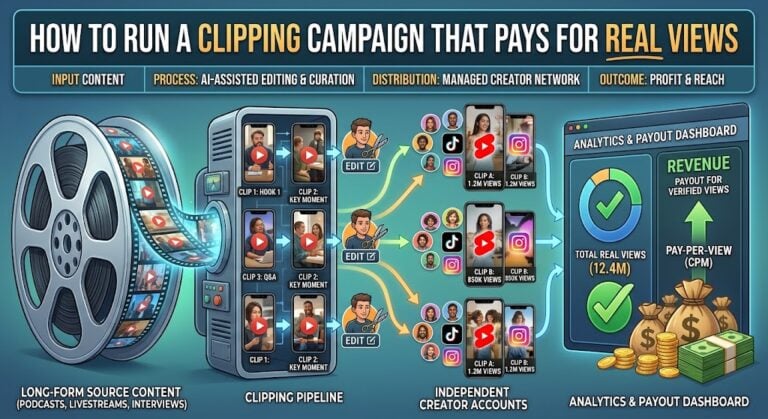
Clipping campaigns have become one of the fastest ways for brands, streamers and podcasters to show up on short-form platforms. Instead of paying for a single sponsored post, the brand pays editors to cut long videos into short clips and publish them, usually at a rate per thousand views.
You can recruit clippers yourself, or hire a clipping agency that handles editing, publishing and verified delivery. Either way, the same rules decide whether the budget buys real attention or just big numbers in a spreadsheet.
What is a clipping campaign?
A clipping campaign turns long-form footage into a steady stream of vertical clips for TikTok, Instagram Reels and YouTube Shorts. The source can be a livestream, a podcast, a webinar, a product demo or an interview.
Clippers pick the strongest moments, add captions and a hook, and post them. The brand pays for the output, the views, or both.
Step 1: Choose the delivery model first
Before you ask anyone for a quote, decide what you are actually buying. There are three common models:
- Editing only. The clipper delivers finished files and your team publishes them.
- Managed publishing. The clipper or agency also posts the clips to agreed accounts on an agreed schedule.
- Creator-owned distribution. Clippers post on their own accounts and get paid on the views they earn.
A low price per clip means nothing until you know which of these it covers.
Step 2: Sort out footage rights
Only hand over footage your team is allowed to reuse. Guest appearances, music, game footage and third-party logos can all carry restrictions.
Write down which sources are approved, which parts are off limits and how long the clips may stay live.
Step 3: Write a brief clippers can follow
Good clippers move fast, so the brief has to be short and specific. Include:
- The audience you want to reach and the platforms that matter most
- Three to five example moments that represent the brand well
- Topics, words and visuals to avoid
- Caption style, on-screen text rules and any required disclosure
- The call to action, if there is one
Step 4: Define what a payable view is
This is where most campaigns go wrong. A platform‘s view counter and the number of views you agree to pay for are two different things.
Agree in advance which platforms and accounts count, how long the counting window lasts, and whether reposts, duplicate uploads and boosted posts qualify. Decide this before the first clip goes live, not after you see the biggest number.
Step 5: Verify before you pay
Ask for the post link or ID for every clip, plus dated screenshots of the counter at the end of the window. Keep each record next to the clip it belongs to.
If you want a deeper process, this guide on how to verify clipping campaign views covers post identity, counter captures and duplicate rules in detail.
Step 6: Watch for fake reach
Sudden spikes, comments that do not match the clip, and audiences from countries you never targeted are all reasons to ask questions. They are not automatic proof of fraud, but they should pause a payment until someone checks.
The same thinking applies to clippers who post on their own accounts. Run a quick creator audience quality audit before you add a new account to the campaign.
Step 7: Report what actually happened
A useful report separates verified views from unverified ones and shows which clips, hooks and topics did the work. It should also show follows, site visits or sign-ups where you can track them.
That gives you a clear answer for the next campaign: which moments to clip again, and which accounts to keep.
Final thoughts
Clipping works because most long-form content is only watched once. A clear delivery model, clean footage rights, a short brief and honest view verification turn that unused footage into reach you can actually trust.

0 Comments